
Summary
Explore the wild coastlines of Baffin Bay and the mythical region of Thule, at the heart of the Far North. As you sail along, you will discover spectacular polar landscapes, including mountains shaped by glaciers, broken-up ice floes and brash ice, and endless tundra where you could be lucky enough to spot polar bears. Not to mention the majestic, UNESCO-listed Disko Bay, renowned for the largest icebergs in the Northern Hemisphere. But the essence of this journey lies in meeting the Inuit communities of Greenland and experiencing authentic, unforgettable moments as they share with you their ancestral way of life, underpinned by resilience and wisdom.
We are privileged guests in these remote lands where we are at the mercy of weather, ice, tidal and current conditions. Landings on certain sites and the observation of certain wildlife cannot be guaranteed. They vary from day to day, making each PONANT cruise a unique experience. The Captain and the Expedition Leader will make every effort to ensure that your experience is as rich as possible, while complying with the safety rules and instructions imposed by the AECO.Itinerary & Map
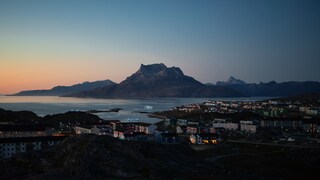
Nuuk, meaning “the cape”, was Greenland’s first town (1728). Started as a fort and later mission and trading post some 240 kilometers south of the Arctic Circle...
Full description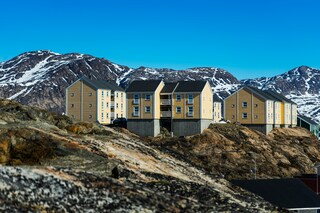
Located just north of the Arctic Circle, Sisimiut is the northernmost town in Greenland where the port remains free of ice in the winter. Yet it is also the sou...
Full description
In AD 850, the Vikings established their parliament in Tórshavn, a name which translates as "Thor's harbor." It was named after Thor, the god of thunder and lig...
Full descriptionIn AD 850, the Vikings established their parliament in Tórshavn, a name which translates as "Thor's harbor." It was named after Thor, the god of thunder and lig...
Full description
Located in northern Baffin Island, Pond Inlet is a small, predo¬minantly Inuit community, with a population of roughly 1,500 inhabitants. In 1818, the British e...
Full descriptionDevon Island is Canada’s sixth largest island and was first seen by Europeans in the early 17th century. The Thule culture had already settled there many centur...
Full descriptionDevon Island is Canada’s sixth largest island and was first seen by Europeans in the early 17th century. The Thule culture had already settled there many centur...
Full description
Nuuk, meaning “the cape”, was Greenland’s first town (1728). Started as a fort and later mission and trading post some 240 kilometers south of the Arctic Circle...
Full description
Nuuk, meaning “the cape”, was Greenland’s first town (1728). Started as a fort and later mission and trading post some 240 kilometers south of the Arctic Circle...
Full description
Located just north of the Arctic Circle, Sisimiut is the northernmost town in Greenland where the port remains free of ice in the winter. Yet it is also the sou...
Full description
In AD 850, the Vikings established their parliament in Tórshavn, a name which translates as "Thor's harbor." It was named after Thor, the god of thunder and lig...
Full descriptionIn AD 850, the Vikings established their parliament in Tórshavn, a name which translates as "Thor's harbor." It was named after Thor, the god of thunder and lig...
Full description
Located in northern Baffin Island, Pond Inlet is a small, predo¬minantly Inuit community, with a population of roughly 1,500 inhabitants. In 1818, the British e...
Full descriptionDevon Island is Canada’s sixth largest island and was first seen by Europeans in the early 17th century. The Thule culture had already settled there many centur...
Full descriptionDevon Island is Canada’s sixth largest island and was first seen by Europeans in the early 17th century. The Thule culture had already settled there many centur...
Full description
Nuuk, meaning “the cape”, was Greenland’s first town (1728). Started as a fort and later mission and trading post some 240 kilometers south of the Arctic Circle...
Full descriptionNuuk (Godthaab)
Nuuk, meaning “the cape”, was Greenland’s first town (1728). Started as a fort and later mission and trading post some 240 kilometers south of the Arctic Circle, it is the current capital. Almost 30% of Greenland’s population lives in the town. Not only does Nuuk have great natural beauty in its vicinity, but there are Inuit ruins, Hans Egede’s home, the parliament, and the Church of our Saviour as well. The Greenlandic National Museum has an outstanding collection of Greenlandic traditional dresses, as well as the famous Qilakitsoq mummies. The Katuaq Cultural Center’s building was inspired by the undulating Northern Lights and can house 10% of Nuuk’s inhabitants.
Sisimiut (Holsteinsborg)
Located just north of the Arctic Circle, Sisimiut is the northernmost town in Greenland where the port remains free of ice in the winter. Yet it is also the southernmost town where there is enough snow and ice to drive a dogsled in winter and spring. In Sisimiut, travelling by sled has been the primary means of winter transportation for centuries. In fact, the area has been inhabited for approximately 4,500 years. Modern Sisimiut is the largest business center in the north of Greenland, and is one of the fastest growing Greenlandic cities. Commercial fishing is the lead economy in the town‘s thriving industrial base.
Qaanaaq
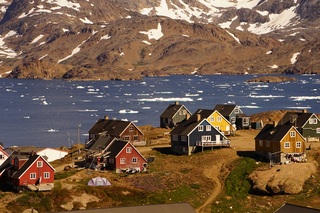
In AD 850, the Vikings established their parliament in Tórshavn, a name which translates as "Thor's harbor." It was named after Thor, the god of thunder and lightning in Norse mythology. The town became a center of trade for the island, and in fact was designated as the only legal place for the islanders to sell and buy products. This trade monopoly was abolished in 1856. Today it is the capital and largest city of the Faroe Islands, with fish-processing plants, a shipyard, and woolen products making up. It is considered to be one of the oldest capitals in Northern Europe.
Pond Inlet, Nunavut
Located in northern Baffin Island, Pond Inlet is a small, predo¬minantly Inuit community, with a population of roughly 1,500 inhabitants. In 1818, the British explorer John Ross named a bay in the vicinity after the English astronomer John Pond. Today Pond Inlet is considered one of Canada's "jewels of the North" thanks to several picturesque glaciers and mountain ranges nearby. Many archaeological sites of ancient Dorset and Thule peoples can be found near Pond Inlet. The Inuit hunted caribou, ringed and harp seals, fish, polar bears, walrus, narwhals, geese, ptarmigans and Arctic hares, long before European and American whalers came here to harvest bowhead whales. Pond Inlet is also known as a major center of Inuit art, especially the printmaking and stone carving that are featured in the town’s art galleries.
Radstock Bay, Devon Island
Devon Island is Canada’s sixth largest island and was first seen by Europeans in the early 17th century. The Thule culture had already settled there many centuries before, and left behind qarmat homes, made of rocks, whale bones, rock and sod walls, and skins for roofs that tell a story of over 800 years of human habitation. Other striking finds in this area are the many fossils of corals, crinoids and nautiloids that can be seen. Just across Lancaster Sound is Prince Leopold Island, a Canadian Important Bird Area, a federally listed migratory bird sanctuary, and a Key Migratory Bird Terrestrial Habitat site with large numbers of Thick-billed Murres, Northern Fulmars and Black-legged Kittiwakes that breed there.
Dates & prices
Select guest
Departs
Thu 10 Aug 2028
Le Boréal
from £16,810 pp
Enquire now Call 020 7590 0610Per person, based on two sharing, cruise only. Updated daily and confirmed when you book.