
Summary
Between the sea and the sky, in a world that has remained authentic, the wild landscapes of the Highlands and the mythical Hebrides and Orkney islands offer a singular journey. Sheer cliffs, deep lochs and windswept moors form a landscape draped in mystery. Megalithic and religious sites rise up out of the fog, while ancient mountains watch over the fishing ports and isolated hamlets. Along sleepy lochs, the typical cottages and captivating gardens serve as reminders that the harshness of the region does stop it from being poetic, while the bird colonies populating the cliffs eroded by the ocean reveal the most important thing: nature reigns supreme here.
Itinerary & Map

Start your adventure in Scotland’s largest city, Glasgow which is overflowing with historic landmarks and a vibrant culture. The distinct architecture is remini...
Full description
Oban, "little bay" in Gaelic, today has a resident population of 8,500 and is the unofficial capital of the West Highlands - the "Gateway to the Isles." The pan...
Full description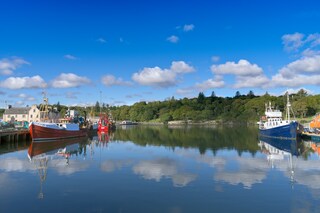
Tour description Stornoway, Scotland The Isle of Lewis and Harris is the northernmost and largest of the Outer Hebrides-the Western Isles in common parlance. Th...
Full description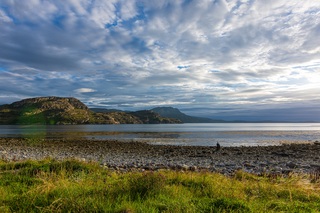
Ullapool is an ideal base for hiking throughout Sutherland and taking wildlife and nature cruises, especially to the Summer Isles. By the shores of salty Loch B...
Full description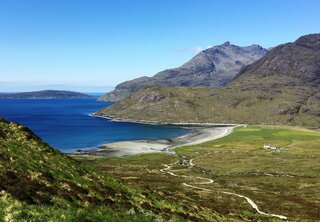
The Isle of Skye ranks near the top of most visitors' priority lists: the romance of Prince Charles Edward Stuart, known as Bonnie Prince Charlie, combined with...
Full description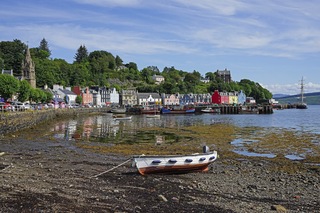
You'll always receive a welcome to remember, as the colourful cafes, houses and shops that line Tobermory's picturesque harbour salute your arrival. Located on...
Full description
Start your adventure in Scotland’s largest city, Glasgow which is overflowing with historic landmarks and a vibrant culture. The distinct architecture is remini...
Full description
Start your adventure in Scotland’s largest city, Glasgow which is overflowing with historic landmarks and a vibrant culture. The distinct architecture is remini...
Full description
Oban, "little bay" in Gaelic, today has a resident population of 8,500 and is the unofficial capital of the West Highlands - the "Gateway to the Isles." The pan...
Full description
Tour description Stornoway, Scotland The Isle of Lewis and Harris is the northernmost and largest of the Outer Hebrides-the Western Isles in common parlance. Th...
Full description
Ullapool is an ideal base for hiking throughout Sutherland and taking wildlife and nature cruises, especially to the Summer Isles. By the shores of salty Loch B...
Full description
The Isle of Skye ranks near the top of most visitors' priority lists: the romance of Prince Charles Edward Stuart, known as Bonnie Prince Charlie, combined with...
Full description
You'll always receive a welcome to remember, as the colourful cafes, houses and shops that line Tobermory's picturesque harbour salute your arrival. Located on...
Full description
Start your adventure in Scotland’s largest city, Glasgow which is overflowing with historic landmarks and a vibrant culture. The distinct architecture is remini...
Full descriptionGlasgow
Start your adventure in Scotland’s largest city, Glasgow which is overflowing with historic landmarks and a vibrant culture. The distinct architecture is reminiscent classic 19th-century fused together with modern early 20th-century dubbed ‘Glasgow Style’. The checkerboard layout makes the city easy to navigate with lively street entertainment around every corner.
Oban
Oban, "little bay" in Gaelic, today has a resident population of 8,500 and is the unofficial capital of the West Highlands - the "Gateway to the Isles." The panoramic views of the mountains, lochs and islands which have captivated artists, authors, composers, and poets for centuries are as striking now as they were when Dunollie Castle, a ruined keep which has stood sentinel over the narrow entrance to the sheltered bay for around six hundred years, was the northern outpost of the Dalriadic Scots. It is no surprise to find Oban in the 21st-century remains a magnet for travellers from all over the world. The town's present day popularity owes much to the Victorians, and as early as 1812, when the Comet steamship linked Oban with Glasgow, the town played host to intrepid travellers touring Staffa - the inspiration for Mendelssohn's Hebridean Overture - and Iona - home of Scottish Christianity since St Columba stepped ashore in AD563. Indeed once Oban had the royal seal of approval from Queen Victoria, who called it "one of the finest spots we have seen," the town's destiny as an endearingly enchanting holiday destination was as firmly set as the lava columns of Fingal's Cave in Oban is justifiably known as the “gateway to the Isles.” The town's south pier is the embarkation point for car ferries to Mull, Coll, Tiree, Barra, South Uist, Colonsay, Lismore and Islay. From these islands you can travel further a field to Iona, Staffa and to many of the smaller less well known isles.
Stornoway, Isle of Lewis
Tour description Stornoway, Scotland The Isle of Lewis and Harris is the northernmost and largest of the Outer Hebrides-the Western Isles in common parlance. The island's only major town, Stornoway, is on a nearly landlocked harbor on the east coast of Lewis. It's the port capital for the Outer Hebrides and the island's cultural center, such that it is. Stornoway has an increasing number of good restaurants. Lewis has some fine historic attractions, including the Calanais Standing Stones-a truly magical place. The Uists are known for their rare, plentiful wildlife. Stornoway. Besides being the island's main entry point for ferries, Stornoway is also Lewis's main arts center. You'll find some good restaurants in town if you want to have lunch off the ship. The town can be explored by bicycle if you are so inclined. Local rental shops can give you advice on where to ride, including a route to Tolsta that takes in five stunning beaches before reaching the edge of moorland. An Lanntair Arts Centre. The fabulous An Lanntair Arts Centre has exhibitions of contemporary and traditional art, as well as a cinema, a gift shop, and a restaurant serving international and Scottish fare. There are frequent traditional musical and theatrical events in the impressive auditorium. Kenneth St.. Black House. In the small community of Arnol, the Black House is a well-preserved example of an increasingly rare type of traditional Hebridean home. Once common throughout the islands-even into the 1950s-these dwellings were built without mortar and thatched on a timber framework without eaves. Other characteristic features include an open central peat hearth and the absence of a chimney-hence the soot and the designation black. On display inside are many of the house's original furnishings. To reach Arnol from Port of Ness, head south on the A857 and pick up the A858 at Barvas. Off A858, 21 mi southwest of Port of Ness. Admission charged. Calanais Standing Stones. These impressive stones are actually part of a cluster of several different archaeological sites in this area. Probably positioned in several stages between 3000 BC and 1500 BC, the grouping consists of an avenue of 19 monoliths extending northward from a circle of 13 stones, with other rows leading south, east, and west. Ruins of a cairn sit within the circle on the east side. Researchers believe they may have been used for astronomical observations, but you can create your own explanations. The visitor center has an exhibit on the stones, a gift shop, and a tearoom. On an unmarked road off A858. Admission charged. Dun Carloway. One of the best-preserved Iron Age brochs (circular stone towers) in Scotland, Dun Carloway dominates the scattered community of Carloway. The mysterious tower was probably built around 2,000 years ago as protection against seaborne raiders. The Dun Broch Centre explains more about the broch and its setting. Off A857. Gearrannan. Up a side road north from Carloway, Gearrannan is an old black-house village that has been brought back to life with a museum screening excellent short films on peat cutting and weaving. For a unique experience, groups can rent the restored houses. Leverburgh. At Leverburgh you can take the ferry to North Uist. Nearby Northton has several attractions; St. Clement's Church at Rodel is particularly worth a visit. MacGillivray Centre. Located in a round building overlooking the bay, the MacGillivray Centre gives insight into the life and work of William MacGillivray (1796-1852), a noted naturalist with strong links to Harris. MacGillivray authored the five-volume History of British Birds. This is a great location for a picnic (there are tables for just such a purpose). A walk to a ruined church starts at the parking lot. A859, Northton. Seallam! Visitor Centre and Co Leis Thu? Genealogical Research Centre. The center is where you can trace your Western Isles ancestry. Photographs and interpretive signs describe the history of Harris and its people. The owners organize guided walks and cultural evenings weekly between May and September. Off A859, Northton. Admission charged. St. Clement's Church. At the southernmost point of Harris is the community of Rodel, where you can find St. Clement's Church, a cruciform church standing on a hillock. This is the most impressive pre-Reformation church in the Outer Hebrides; it was built around 1500 and contains the magnificently sculptured tomb (1528) of the church's builder, Alasdair Crotach, MacLeod chief of Dunvegan Castle. Rodel is 3 mi south of Leverburgh and 21 mi south of Tarbert. A859, Rodel. Port of Ness. The stark, windswept community of Port of Ness, 30 mi north of Stornoway, cradles a small harbor squeezed in among the rocks. Butt of Lewis Lighthouse. At the northernmost point of Lewis stands the Butt of Lewis Lighthouse, designed by David and Thomas Stevenson (of the prominent engineering family whose best-known member was not an engineer at all, but the novelist Robert Louis Stevenson). The structure was first lighted in 1862. The adjacent cliffs provide a good vantage point for viewing seabirds, whales, and porpoises. The lighthouse is northwest of Port of Ness along the B8014. Shopping Harris tweed is available at many outlets on the islands, including some of the weavers' homes; keep an eye out for signs directing you to weavers' workshops. Harris Tweed Artisans Cooperative. The Harris Tweed Artisans Cooperative sells stylish and quirky hand-crafted tweed clothing, hats, accessories, all made by artists belonging to the cooperative. 40 Point St., Stornoway. Borgh Pottery. At Borgh Pottery, open from Monday to Saturday 9:30 to 6, you can buy attractive hand-thrown studio pottery made on the premises, including lamps, vases, mugs, and dishes. Fivepenny House, A857, Borve.
Ullapool
Ullapool is an ideal base for hiking throughout Sutherland and taking wildlife and nature cruises, especially to the Summer Isles. By the shores of salty Loch Broom, the town was founded in 1788 as a fishing station to exploit the local herring stocks. There's still a smattering of fishing vessels, as well as visiting yachts and foreign ships. When their crews fill the pubs, Ullapool has a cosmopolitan feel. The harbor area comes to life when the Lewis ferry arrives and departs.
Portree, Isle of Skye
The Isle of Skye ranks near the top of most visitors' priority lists: the romance of Prince Charles Edward Stuart, known as Bonnie Prince Charlie, combined with the misty Cuillin Hills and their proximity to the mainland all contribute to its popularity. Today Skye remains mysterious and mountainous, an island of sunsets that linger brilliantly until late at night and of beautiful, soft mists. Much photographed are the really old crofts, one or two of which are still inhabited, with their thick stone walls and thatch roofs. Orientation on Skye is easy: follow the only roads around the loops on the northern part of the island and enjoy the road running the length of the Sleat Peninsula in southern Skye, taking the loop roads that exit to the north and south as you please. There are some stretches of single-lane road, but none poses a problem.
Tobermory, Isle of Mull
You'll always receive a welcome to remember, as the colourful cafes, houses and shops that line Tobermory's picturesque harbour salute your arrival. Located on the craggy Scottish Inner Hebrides, Tobermory serves as the capital of the Isle of Mull. There's a high chance you'll recognise the town’s colourfully-daubed buildings, as their charming exteriors have featured in countless TV shows - most notably in the children’s favourite, Balamory. There's always a new story to discover here – not least the legend that suggests there's a sunken Spanish galleon, brimming with lost gold, sitting just below the waves that roll around the harbour. Learn a little more of the area’s history at the Mull Museum, or head out to enjoy some of the fabulous wildlife watching opportunities on offer on a boat tour. You can spot majestic birds like white tail and golden eagles circling in the skies, or turn your attention to the waves, where friendly dolphins and Minke whales are regular visitors. Treat yourself to a sample of one of the island's finest exports before leaving, as you drop in at the Tobermory Distillery for some whiskey tasting. Established in 1798, it’s one of Scotland's oldest distilleries.
Date & price
Select guest
Departs
Wed 26 Apr 2028
from £4,680 pp
Enquire now Call 020 7590 0610Per person, based on two sharing, cruise only. Updated daily and confirmed when you book.