
Summary
Itinerary & Map
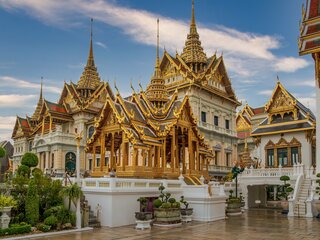
Bangkok, also known as the City of Angels and Venice of the East thrills with energy. There's such a vast array of sightseeing, shopping, and eating possibiliti...
Full descriptionSihanoukville is the premier beach destination in Cambodia for tourists and Cambodians alike, with golden white sands, tropical islands and mangrove jungles. A...
Full description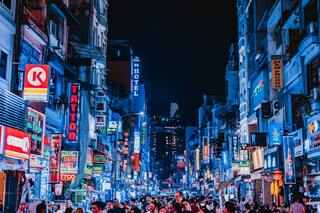
Romantically referred to by the French as the Pearl of the Orient, Ho Chi Minh City today is a super-charged city of sensory overload. Motorbikes zoom day and n...
Full description
Romantically referred to by the French as the Pearl of the Orient, Ho Chi Minh City today is a super-charged city of sensory overload. Motorbikes zoom day and n...
Full description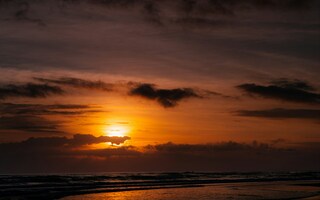
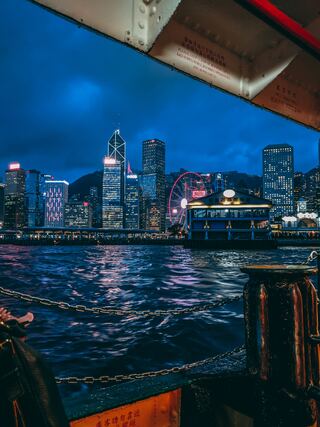
The Hong Kong Island skyline, with its ever-growing number of skyscrapers, speaks to ambition and money. Paris, London, even New York were centuries in the maki...
Full description
The Hong Kong Island skyline, with its ever-growing number of skyscrapers, speaks to ambition and money. Paris, London, even New York were centuries in the maki...
Full description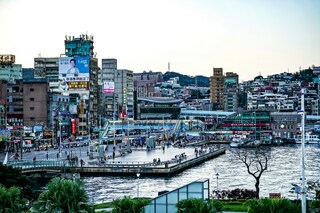
With the glittering lights of Taipei - a futuristic metropolis of culture and ideas - sparkling nearby, Keelung is the first calling point for many visitors arr...
Full description
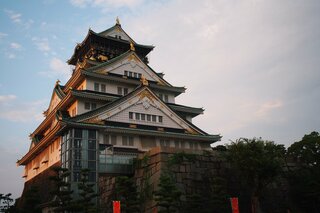
From Minami's neon-lighted Dotombori and historic Tenno-ji to the high-rise class and underground shopping labyrinths of Kita, Osaka is a city that pulses with...
Full description
From Minami's neon-lighted Dotombori and historic Tenno-ji to the high-rise class and underground shopping labyrinths of Kita, Osaka is a city that pulses with...
Full description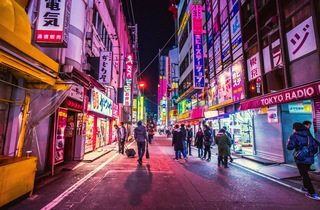
Lights, sushi, manga! Sprawling, frenetic, and endlessly fascinating, Japan’s capital is a city of contrasts. Shrines and gardens are pockets of calm between fa...
Full description
Bangkok, also known as the City of Angels and Venice of the East thrills with energy. There's such a vast array of sightseeing, shopping, and eating possibiliti...
Full descriptionSihanoukville is the premier beach destination in Cambodia for tourists and Cambodians alike, with golden white sands, tropical islands and mangrove jungles. A...
Full description
Romantically referred to by the French as the Pearl of the Orient, Ho Chi Minh City today is a super-charged city of sensory overload. Motorbikes zoom day and n...
Full description
Romantically referred to by the French as the Pearl of the Orient, Ho Chi Minh City today is a super-charged city of sensory overload. Motorbikes zoom day and n...
Full description
The Hong Kong Island skyline, with its ever-growing number of skyscrapers, speaks to ambition and money. Paris, London, even New York were centuries in the maki...
Full description
The Hong Kong Island skyline, with its ever-growing number of skyscrapers, speaks to ambition and money. Paris, London, even New York were centuries in the maki...
Full description
With the glittering lights of Taipei - a futuristic metropolis of culture and ideas - sparkling nearby, Keelung is the first calling point for many visitors arr...
Full description
From Minami's neon-lighted Dotombori and historic Tenno-ji to the high-rise class and underground shopping labyrinths of Kita, Osaka is a city that pulses with...
Full description
From Minami's neon-lighted Dotombori and historic Tenno-ji to the high-rise class and underground shopping labyrinths of Kita, Osaka is a city that pulses with...
Full description
Lights, sushi, manga! Sprawling, frenetic, and endlessly fascinating, Japan’s capital is a city of contrasts. Shrines and gardens are pockets of calm between fa...
Full descriptionBangkok (Thailand)
Bangkok, also known as the City of Angels and Venice of the East thrills with energy. There's such a vast array of sightseeing, shopping, and eating possibilities that you'll have little time to rest. When you do find a moment, pamper yourself with spa treatments, skyline-view bars, luxurious hotels, and excellent restaurants. The city is a mesmerizing blend of old and new, East and West, and dizzying contradictions. Temples and red-light districts, languid canals and permanent gridlock, streetside vendors and chic upscale eateries, all make their home together, all at the same time. Bangkok rarely fails to make an impression, and yes, you might need to go spend a few days on the beach to recover from it all. Although Bangkok is not known for jaw-dropping tourist attractions, it does have an endless supply of worthwhile pilgrimages. The Grand Palace, Wat Phra Kaew, and the Emerald Buddha are tops on every visitor's itinerary, and lesser-known temples, such as Wat Benjamabophit, the golden stupa of Wat Sakhet, and Wat Suthat, are all worthy of a stop. Besides temples, there are plenty of other interesting niches and touring possibilities to fit just about every interest. Take in a venom extraction and python feeding show at the Queen Saowapha Snake Farm, or go to the nearby Jim Thompson House to learn all about the famed Thai silk industry. If architecture is your forte, there is the Suan Pakkard Palace with its antique teak house collection, and the even more astounding Vimanmek Palace, which contains the world's largest golden teak building. Bangkok's Chinatown merits at least a day on every travel itinerary—be sure to check out the sprawling labyrinthine Flower and Thieves markets. Thai food is unrivaled for spice, taste, and variation. From multicourse meals to small street vendors, the one constant here is fresh and delicious at every level. You can have superlative roast duck or wonton noodles on a street corner for lunch and then be dining on world-class chef creations in the Oriental or Shangri-La hotels for supper. It doesn't have to be all spicy Thai either, as Bangkok is home to excellent French, Italian, and other world cuisines, and you need a few years just to make a dent in all the options that are available. The Old City is a major destination for travelers, as it's home to opulent temples like Wat Po and Wat Phra Kaew. Across the river is Thonburi, a mostly residential neighborhood, where you can find Wat Arun. At the northern tip of the Old City is Banglamphu, one of Bangkok's older residential neighborhoods. It's best known now for Khao San Road, a backpacker hangout, though the neighborhood has much more to offer, especially when it comes to street food. North of Banglamphu is Dusit, the royal district since the days of Rama V. East of the Old City is Chinatown, a labyrinth of streets with restaurants, shops, and warehouses. Farther down the Chao Phraya River is bustling Silom Road, one of the city's major commercial districts. Patpong, the city's most famous of several red-light districts, is also here. Bang Rak is home to some of the city's leading hotels: the Mandarin Oriental, the Peninsula, the Royal Orchid Sheraton, and the Shangri-La. To the north of Rama IV Road is Bangkok's largest green area, Lumphini Park. Continue north and you reach Sukhumvit Road, once a residential area. More recently, Thong Lor, farther east along Sukhumvit, has become the "in" neighborhood for those want to see and be seen. The Nana and Asok areas of Sukhumvit are now home to the even busier red-light entertainment districts (Nana and Soi Cowboy) than Patpong.
Kâmpóng Saôm (Cambodia)
Sihanoukville is the premier beach destination in Cambodia for tourists and Cambodians alike, with golden white sands, tropical islands and mangrove jungles. A relatively new city, it sprang to life in 1955 with the construction of the only deep-sea port of a newly independent Cambodia. With the bay of Thailand surrounding it on three sides, Sihanoukville was named in honour of the former King Norodom Sihanouk in 1964. As Cambodia descended into civil war the town fell on hard times with the Khmer Rouge using the famous Independence Hotel for target practice. In 1993 peace returned to Cambodia and since then Sihanoukville has been slowly rebuilding itself. Today it attracts Asian Individual travellers, young students and back-packers but after decades of war and upheaval the town’s infrastructure is still very much in its infancy. A visit to Ream National Park offers pristine mangrove forests rich in wildlife with miles of beaches unmarked by footprints.
Ho Chi Minh City (Vietnam)
Romantically referred to by the French as the Pearl of the Orient, Ho Chi Minh City today is a super-charged city of sensory overload. Motorbikes zoom day and night along the wide boulevards, through the narrow back alleys and past vendors pushing handcarts hawking goods of all descriptions. Still called Saigon by most residents, this is Vietnam's largest city and the engine driving the country's current economic resurgence, but despite its frenetic pace, it's a friendlier place than Hanoi and locals will tell you the food—simple, tasty, and incorporating many fresh herbs—is infinitely better than in the capital.This is a city full of surprises. The madness of the city's traffic—witness the oddball things that are transported on the back of motorcycles—is countered by tranquil pagodas, peaceful parks, quirky coffee shops, and whole neighborhoods hidden down tiny alleyways, although some of these quiet spots can be difficult to track down. Life in Ho Chi Minh City is lived in public: on the back of motorcycles, on the sidewalks, and in the parks. Even when its residents are at home, they're still on display. With many living rooms opening onto the street, grandmothers napping, babies being rocked, and food being prepared, are all in full view of passersby.Icons of the past endure in the midst of the city’s headlong rush into capitalism. The Hotel Continental, immortalized in Graham Greene's The Quiet American, continues to stand on the corner of old Indochina's most famous thoroughfare, the rue Catinat, known to American G.I.s during the Vietnam War as Tu Do (Freedom) Street and renamed Dong Khoi (Uprising) Street by the Communists. The city still has its ornate opera house and its old French city hall, the Hôtel de Ville. The broad colonial boulevards leading to the Saigon River and the gracious stucco villas are other remnants of the French colonial presence. Grisly reminders of the more recent past can be seen at the city's war-related museums. Residents, however, prefer to look forward rather than back and are often perplexed by tourists' fascination with a war that ended 40 years ago.The Chinese influence on the country is still very much in evidence in the Cholon district, the city's Chinatown, but the modern office towers and international hotels that mark the skyline symbolize Vietnam's fixation on the future.
Hong Kong (Hong Kong)
The Hong Kong Island skyline, with its ever-growing number of skyscrapers, speaks to ambition and money. Paris, London, even New York were centuries in the making, while Hong Kong's towers, bright lights, and glitzy shopping emporia weren't yet part of the urban scene when many of the young investment bankers who fuel one of the world's leading financial centers were born. Commerce is concentrated in the glittering high-rises of Central, tucked between Victoria Harbor and forested peaks on Hong Kong Island's north shore. While it's easy to think all the bright lights are the sum of today's Hong Kong, you need only walk or board a tram for the short jaunt west into Western to discover a side of Hong Kong that is more traditionally Chinese but no less high-energy. You'll discover the real Hong Kong to the east of Central, too, in Wan Chai, Causeway Bay, and beyond. Amid the residential towers are restaurants, shopping malls, bars, convention centers, a nice smattering of museums, and—depending on fate and the horse you wager on—one of Hong Kong's luckiest or unluckiest spots, the Happy Valley Racecourse. Kowloon sprawls across a generous swath of the Chinese mainland across Victoria Harbour from Central. Tsim Sha Tsui, at the tip of Kowloon peninsula, is packed with glitzy shops, first-rate museums, and eye-popping views of the skyline across the water. Just to the north are the teeming market streets of Mong Kok and in the dense residential neighborhoods beyond, two of Hong Kong's most enchanting spiritual sights, Wong Tai Sin Temple and Chi Lin Nunnery. As you navigate this huge metropolis (easy to do on the excellent transportation network), keep in mind that streets are usually numbered odd on one side, even on the other. There's no baseline for street numbers and no block-based numbering system, but street signs indicate building numbers for any given block.
Keelung (Chilung) (Taiwan)
With the glittering lights of Taipei - a futuristic metropolis of culture and ideas - sparkling nearby, Keelung is the first calling point for many visitors arriving in Taiwan. While this port city essentially serves as Taipei's ocean gateway, you shouldn’t be too hasty in dashing off to Taipei's neon-lit magic – first it’s well worth spending some time exploring the famous glowing night market, which hums with life each evening and is famous for its local seafood.
Osaka (Japan)
From Minami's neon-lighted Dotombori and historic Tenno-ji to the high-rise class and underground shopping labyrinths of Kita, Osaka is a city that pulses with its own unique rhythm. Though Osaka has no shortage of tourist sites, it is the city itself that is the greatest attraction. Home to some of Japan's best food, most unique fashions, and warmest locals, Osaka does not beg to be explored—it demands it. More than anywhere else in Japan, it rewards the impulsive turn down an interesting side street or the chat with a random stranger. People do not come here to see the city, they come to experience it.Excluded from the formal circles of power and aristocratic culture in 16th-century Edo (Tokyo), Osaka took advantage of its position as Japan's trading center, developing its own art forms such as Bunraku puppet theater and Rakugo comic storytelling. It was in Osaka that feudal Japan's famed Floating World—the dining, theater, and pleasure district—was at its strongest and most inventive. Wealthy merchants and common laborers alike squandered fortunes on culinary delights, turning Osaka into "Japan's Kitchen," a moniker the city still has today. Though the city suffered a blow when the Meiji government canceled all of the samurai class's outstanding debts to the merchants, it was quick to recover. At the turn of the 20th century, it had become Japan's largest and most prosperous city, a center of commerce and manufacturing.Today Osaka remains Japan's iconoclastic metropolis, refusing to fit Tokyo's norms and expectations. Unlike the hordes of Tokyo, Osakans are fiercely independent. As a contrast to the neon and concrete surroundings, the people of Osaka are known as Japan's friendliest and most outgoing. Ask someone on the street for directions in Tokyo and you are lucky to get so much as a glance. Ask someone in Osaka and you get a conversation.The main areas of the city, Kita (north) and Minami (south), are divided by two rivers: the Dojima-gawa and the Tosabori-gawa. Between Kita and Minami is Naka-no-shima, an island and the municipal center of Osaka. Kita (north of Chuo Dori) is Osaka's economic hub and contains Osaka's largest stations: JR Osaka and Hankyu Umeda. The area is crammed with shops, department stores, and restaurants. Nearby are a nightlife district, Kita-shinchi; Naka-no-shima and the Museum of Oriental Ceramics; Osaka-jo (Osaka Castle); and Osaka Koen (Osaka Park). Restaurants, bars, department stores, and boutiques attract Osaka's youth to Minami (south Chuo Dori); theatergoers head to the National Bunraku Theatre and electronics-lovers to Den Den Town. For a glimpse of old Osaka, visit Tenno-ji Temple and Shin Sekai. The main stations are Namba, Shin-sai-bashi, Namba Nankai, and Tenno-ji. There's easy access to the Municipal Museum of Fine Art and Sumiyoshi Taisha (Sumiyoshi Grand Shrine).The bay area, to the west of the city center, is home to the Osaka Aquarium and Universal Studios Japan. The Shinkansen stops at Shin-Osaka, three stops (about five minutes) north of Osaka Station on the Mido-suji subway line. To the north of Shin-Osaka is Senri Expo Park.
Tokyo (Japan)
Lights, sushi, manga! Sprawling, frenetic, and endlessly fascinating, Japan’s capital is a city of contrasts. Shrines and gardens are pockets of calm between famously crowded streets and soaring office buildings. Mom-and-pop noodle houses share street space with Western-style chain restaurants and exquisite fine dining. Shopping yields lovely folk arts as well as the newest electronics. And nightlife kicks off with karaoke or sake and continues with techno clubs and more. Whether you seek the traditional or the cutting edge, Tokyo will provide it.
Date & price
Departs
Tue 2 Mar 2027
from £12,889 pp
Enquire now Call 020 7590 0610Per person, based on two sharing, cruise only. Updated daily and confirmed when you book.