
Summary
Itinerary & Map
Bordeaux as a whole, rather than any particular points within it, is what you'll want to visit in order to understand why Victor Hugo described it as Versailles...
Full description
Bordeaux as a whole, rather than any particular points within it, is what you'll want to visit in order to understand why Victor Hugo described it as Versailles...
Full description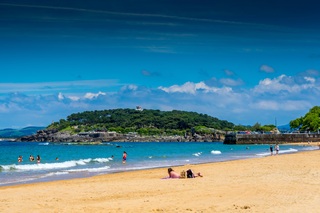
The Campo Valdés baths, dating back to the 1st century AD, and other reminders of Gijón's time as an ancient Roman port remain visible downtown. Gijón was almos...
Full description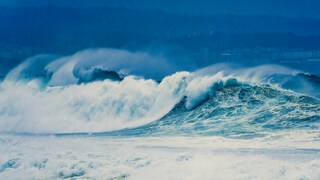
El Ferrol has been inextricably linked to the sea for more than two millennia, being a major shipbuilding centre for most of its history. From its beginnings as...
Full description
Ever since the Romans constructed a fort here and began using it as a trading post, Oporto has been a prosperous commercial centre. In the 15th and 16th centuri...
Full description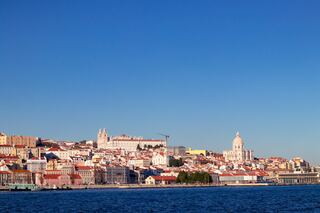
Set on seven hills on the banks of the River Tagus, Lisbon has been the capital of Portugal since the 13th century. It is a city famous for its majestic archite...
Full description
Bordeaux as a whole, rather than any particular points within it, is what you'll want to visit in order to understand why Victor Hugo described it as Versailles...
Full description
Bordeaux as a whole, rather than any particular points within it, is what you'll want to visit in order to understand why Victor Hugo described it as Versailles...
Full description
The Campo Valdés baths, dating back to the 1st century AD, and other reminders of Gijón's time as an ancient Roman port remain visible downtown. Gijón was almos...
Full description
El Ferrol has been inextricably linked to the sea for more than two millennia, being a major shipbuilding centre for most of its history. From its beginnings as...
Full description
Ever since the Romans constructed a fort here and began using it as a trading post, Oporto has been a prosperous commercial centre. In the 15th and 16th centuri...
Full description
Set on seven hills on the banks of the River Tagus, Lisbon has been the capital of Portugal since the 13th century. It is a city famous for its majestic archite...
Full descriptionBordeaux
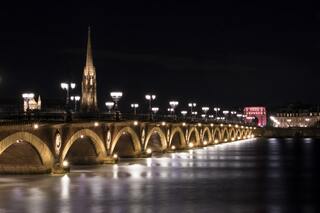
Bordeaux as a whole, rather than any particular points within it, is what you'll want to visit in order to understand why Victor Hugo described it as Versailles plus Antwerp, and why the painter Francisco de Goya, when exiled from his native Spain, chose it as his last home (he died here in 1828). The capital of southwest France and the region's largest city, Bordeaux remains synonymous with the wine trade: wine shippers have long maintained their headquarters along the banks of the Garonne, while buyers from around the world arrive for the huge biennial Vinexpo show (held in odd-number years).Bordeaux is, admittedly, a less exuberant city than many others in France, but lively and stylish elements are making a dent in its conservative veneer. The cleaned-up riverfront is said by some, after a bottle or two, to exude an elegance reminiscent of St. Petersburg, and that aura of 18th-century élan also permeates the historic downtown sector—“le vieux Bordeaux"—where fine shops invite exploration. To the south of the city center are old docklands undergoing renewal—one train station has now been transformed into a big multiplex movie theater—but the area is still a bit shady. To get a feel for the historic port of Bordeaux, take the 90-minute boat trip that leaves Quai Louis-XVIII every weekday afternoon, or the regular passenger ferry that plies the Garonne between Quai Richelieu and the Pont d'Aquitaine in summer. A nice time to stroll around the city center is the first Sunday of the month, when it's pedestrian-only and vehicles are banned.
Gijón
The Campo Valdés baths, dating back to the 1st century AD, and other reminders of Gijón's time as an ancient Roman port remain visible downtown. Gijón was almost destroyed in a 14th-century struggle over the Castilian throne, but by the 19th century it was a thriving port and industrial city. The modern-day city is part fishing port, part summer resort, and part university town, packed with cafés, restaurants, and sidrerías.
Ferrol
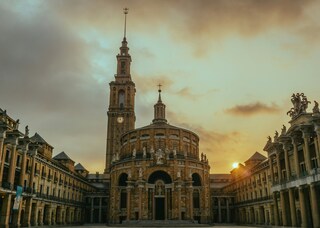
El Ferrol has been inextricably linked to the sea for more than two millennia, being a major shipbuilding centre for most of its history. From its beginnings as a tiny fishing port in the 1st century BC, it endured conquests by Vandals, Suebis, Arabs and Christians. With the arrival of the Bourbons in the 18th century, Ferrol became a leading maritime centre, largely due to its large natural harbour on the Ferrol Inlet, an arm of the Atlantic. Now a large commercial port, Ferrol is also the gateway to the northern Spanish province of Galicia, a region noted for its green mountains, deep gorges and fast-flowing rivers. It is also well placed for visiting the medieval holy city of Santiago de Compostela. Interestingly, Ferrol's city centre is modelled on Lisbon in Portugal, a country with which it has strong historical and linguistic ties. The layout comprises of a rectangle lined with six parallel streets, with two squares on each side. These squares have the city's best shops, restaurants and bars.
Leixões
Ever since the Romans constructed a fort here and began using it as a trading post, Oporto has been a prosperous commercial centre. In the 15th and 16th centuries the city benefited from the wealth generated by Portugal’s maritime discoveries, and later, the establishment of a lucrative wine trade with Britain compensated for the loss of the spice trade. Today, Portugal’s second-largest city is a thriving, cosmopolitan place and is famous for its production of the fortified, sweet 'port' wine. Its historic centre is a UNESCO World Heritage Site and the city was also awarded the status of European Capital of Culture in 2001. A large sandbar prevents ships from sailing into Oporto itself, so for over a century they have used nearby Leixões instead, a man-made seaport constructed nine miles from the city. Leixões is one of Portugal's major sea ports and is also home to one of the country's oldest football clubs, winners of the Taça de Portugal cup in 1961.
Lisbon
Set on seven hills on the banks of the River Tagus, Lisbon has been the capital of Portugal since the 13th century. It is a city famous for its majestic architecture, old wooden trams, Moorish features and more than twenty centuries of history. Following disastrous earthquakes in the 18th century, Lisbon was rebuilt by the Marques de Pombal who created an elegant city with wide boulevards and a great riverfront and square, Praça do Comércio. Today there are distinct modern and ancient sections, combining great shopping with culture and sightseeing in the Old Town, built on the city's terraced hillsides. The distance between the ship and your tour vehicle may vary. This distance is not included in the excursion grades.
Date & price
Select guest
Departs
Wed 1 Sep 2027
from £3,675 pp
Enquire now Call 020 7590 0610Per person, based on two sharing, cruise only. Updated daily and confirmed when you book.