
Article content
22 December 2025 by Joel Rabinowitz
When planning a festive weekend away, it’s often the likes of Prague, Vienna, Munich and Budapest that spring to mind – a well-established lineup of Central European cities renowned for their excellent Christmas markets. The Baltics and the Nordics also have their fair share of compelling choices for a pre-Christmas break, such as Tallinn, Riga, Stockholm and Copenhagen. One place that often gets overlooked, however, is Luxembourg, whose capital city hosts a patchwork of cosy, timber-clad markets, twinkling lights installations and cultural events throughout its annual Winterlights festival. Inspired by a recent event hosted by Visit Luxembourg in London, I decided to shun the usual favourites and take a trip to Luxembourg earlier this month, in search of an alternative, lesser-trodden Christmas destination. And, it’s fair to say, it certainly exceeded expectations.
Exploring Luxembourg City – one of Europe’s most picturesque capitals
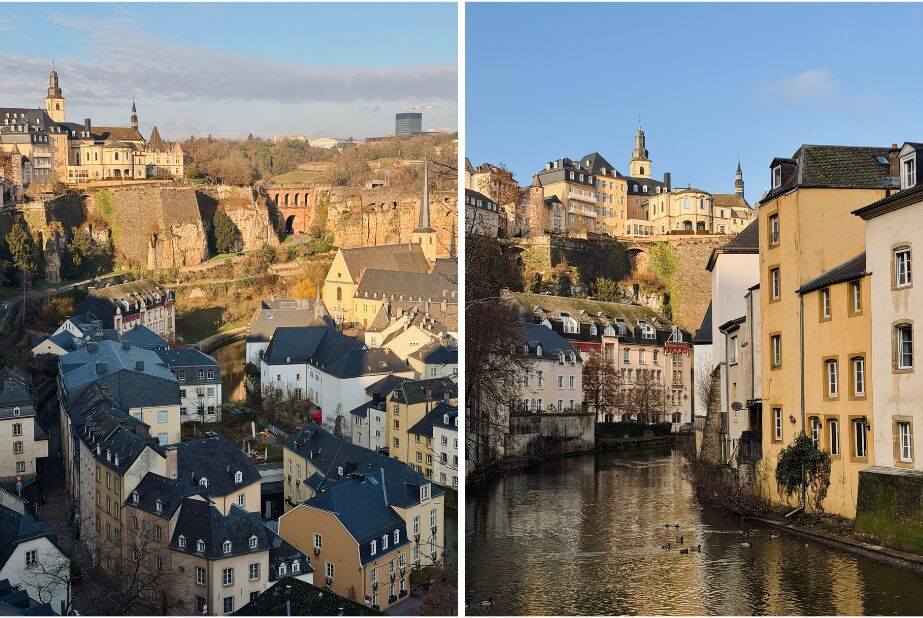
The Grund, Luxembourg City's historic Lower Town district
The flight from London Heathrow to Luxembourg took just under an hour, and would’ve been even quicker had our landing not been delayed by a combination of heavy fog and high winds. Safely on the ground, it wasn’t long before I found a bus heading to the city centre – my first use of Luxembourg’s ultra-efficient and completely free public transport, which I would take advantage of on several occasions throughout my trip. When arriving somewhere new, the journey from the airport is always something I look forward to; it sets the scene, offers an initial flavour of a destination, and provides context for what comes next. This particular bus route passed through Kirchberg, a modern district that’s home to several major EU institutions and tall, glassy office blocks, as well as cultural landmarks such as the Museum of Modern Art and the striking Philarmonie concert hall.
It’s a stark contrast to Luxembourg City’s historic centre, whose dramatic topography, ancient fortifications and eclectic mélange of architectural styles combine to form a stirring spectacle. Such is its unique, multi-tiered urban landscape that I found myself struggling to think of a comparable European city, other than, perhaps, Edinburgh (though only from a geographical perspective). Luxembourg City is essentially built across several steep, sandstone cliffs that plunge down into meandering ravines carved by the Alzette and Pétrusse rivers, while its various neighbourhoods are connected by a series of viaducts, bridges and public elevators.
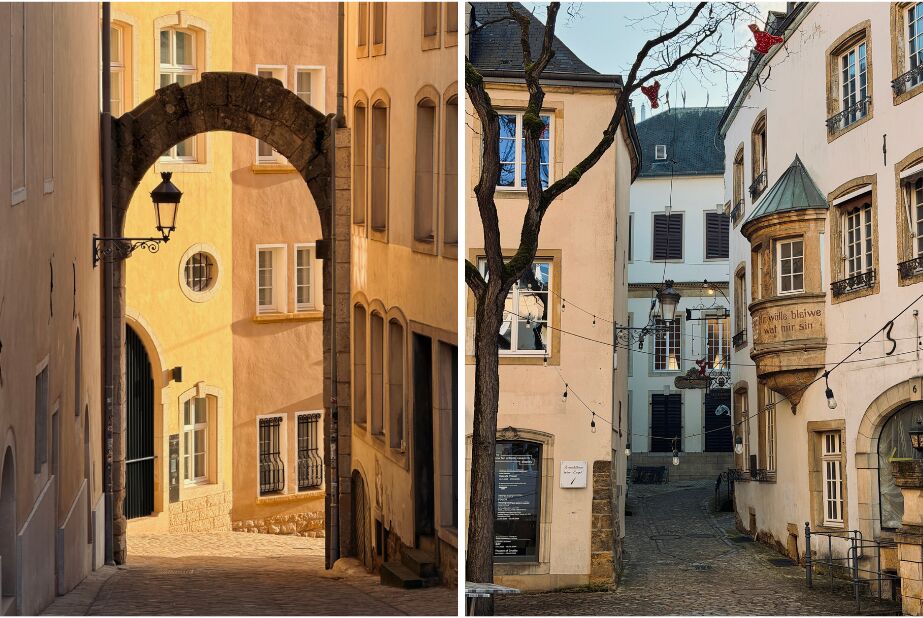
Villa Haute, the Upper Town of Luxembourg City
I began my explorations in the Grund, a small neighbourhood clustered in a leafy valley beside the Alzette River, beneath the city’s historic fortifications. It’s part of Luxembourg City’s UNESCO-listed Old Quarters, and feels very much like a medieval village largely unaltered by the passage of time, with cobbled streets lined by pastel-coloured houses dating back to the 14th century. Towards the northern end of the Grund lies Neumünster Abbey, a former Benedictine abbey that now serves as a cultural hub and events centre.
After strolling through the Grund, I took the public elevator to Plateau du Saint-Esprit, from which I made my way along Chemin de la Corniche. This cliffside promenade was once described by influential Luxembourgish author Batty Weber as ‘Europe’s most beautiful balcony’ – a bold claim indeed, but not without reasonable foundation. Built by the Spanish and the French along the old ramparts during the 17th century, it offers magnificent views overlooking the Alzette River and the Grund, eventually culminating at the Castle Bridge. From here (for a small admission fee), you can descend into the Bock Casemates, a warren of subterranean tunnels burrowed into a rocky promontory – first carved by the Spanish in the 17th century, and later extended by the Austrians in the 18th-century.

Christmas markets in Luxembourg City
Passing the impressive façade of St. Michael’s Church, with its blend of Romanesque, Gothic and Baroque architecture, I navigated the narrow lanes of Ville Haute (the Upper Town) before arriving at Place d’Armes – a bustling square hosting a rather lovely Christmas market. Rather than one large, central Christmas market, Luxembourg City has multiple smaller markets dotted around in various locations; as a result, none of them are overcrowded, and you can easily find a space to linger for a while and soak up the festive atmosphere. In contrast to some of Europe’s most renowned Christmas markets, these appeared to be largely local affairs, and with very reasonable prices (€4.50 for a mulled wine in this day and age – not bad at all). This was the perfect spot for a pre-dinner drink and a fitting place to round off my whistlestop tour of the city.
A luxury castle retreat at Château d'Urspelt
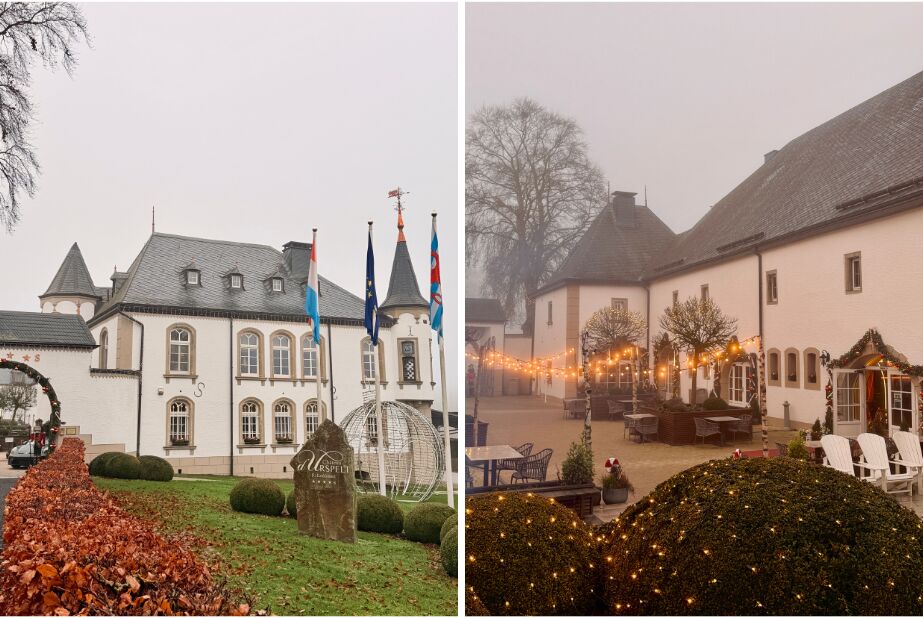
Château d'Urspelt
The second part of my weekend in Luxembourg required travelling all the way to the other side of the country – an entire hour’s journey to the north. Coming from the UK, it’s quite the novelty to be somewhere where the trains are reliable, comfortable, uncrowded, and totally free of charge. Besides free public transport, another thing Luxembourg is renowned for is castles. Depending on your definition, it has over 100 of them – a legacy of its strategic position at the crossroads of Western Europe over the centuries – and I was keen to experience staying in one.
Following a scenic journey through a bucolic landscape of farmland and forested river valleys, I arrived in Clervaux, a small town built around a whitewashed, 12th-century castle. This wasn’t my final destination, however; I would be staying a few kilometres away at Château d'Urspelt, a beautifully restored 18th-century castle nestled among the rolling hills of the rural Éislek region. Its extensive renovation began in 2005, and in 2008, it was designated as a National Monument of Luxembourg. Today, Château d'Urspelt sits at the heart of a 20,000 m² private estate, housing 57 luxurious rooms and suites.
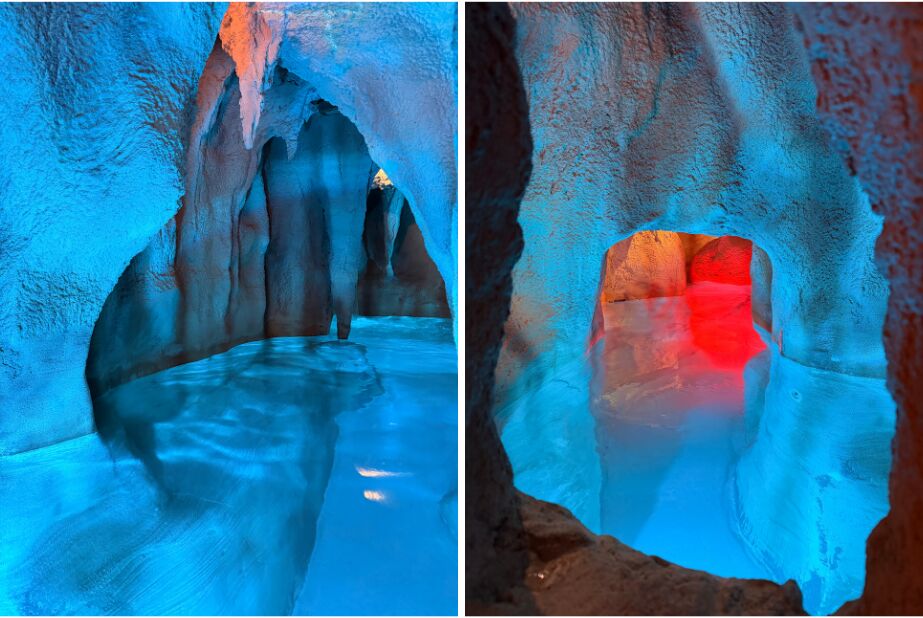
NUXE® Spa at Château d'Urspelt
It was a grey, murky winter’s day when I arrived, but nonetheless the Château looked fabulous, all decked out in glowing Christmas lights and decorations, along with an ice rink in the inner courtyard. After settling into my spacious, elegantly appointed castle room, it was time to head over to the NUXE® Spa for a blissfully relaxing couple of hours enjoying the state-of-the-art wellness facilities, including steam rooms, saunas, a whirlpool bath and a relaxation room with a fireplace and complimentary herbal teas. The standout feature here, however, was the themed swimming pool, which took the form of a subterranean grotto – a labyrinthine collection of water-filled chambers quite unlike anything I’ve experienced before.
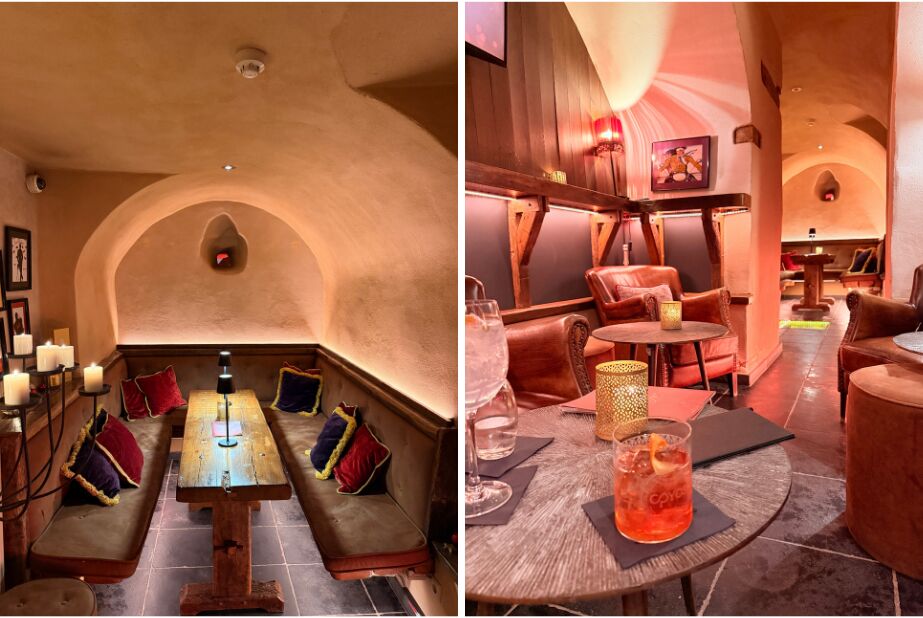
U-Lounge bar at Château d'Urspelt
Feeling well and truly rejuvenated, I later ventured down to the underground bar, which occupies a warren of warmly-lit rooms in the castle’s old cellars. It was a delightfully atmospheric setting for a pre-dinner drink before heading up to the restaurant, set in a grand, timber-beamed hall on the premises of an old barn. The menu featured a small but enticing selection of seasonal dishes, including several that showcased locally sourced produce. I enjoyed a velvety-smooth pumpkin velouté followed by seared Atlantic skrei with a zesty citrus sauce and lightly spiced tabbouleh – both beautifully presented and full of flavour. For dessert, I couldn’t resist the chocolate lava cake served with yoghurt ice cream and biscuit crumb – a deliciously decadent finale to a wonderful meal.
The following morning, I made my way through to the breakfast hall, which comprised a plentiful buffet spread with lots of fresh bread and pastries, fruit and yoghurt, and various warm dishes including eggs, sausages, crispy potato fritters (a Luxembourg speciality) and pancakes. With a train to catch later in the morning, I soon had to be on my way, but I just about had time for a hot drink in the cosy library cafe while waiting for my bus back to Clervaux.
Overall impressions
I thoroughly enjoyed my time in Luxembourg City and at Château d'Urspelt, both of which I’d heartily recommend to anyone considering a short break in an easily accessible but lesser-visited part of Europe. It isn’t the cheapest of destinations, but if you’re accustomed to London prices, you won’t notice a great deal of difference when eating and drinking out. Because of the short flight time from the UK and the fact it’s so straightforward to get about when you’re there, you can really pack quite a lot into a weekend in Luxembourg without it feeling too rushed. Such is the compact nature of the capital city that one or two days is sufficient to get a good feel for it, and if you have the time, I’d definitely suggest taking the train north for a stay at Château d'Urspelt. By pairing the two, you’ll get to experience two contrasting sides of the country – the urban south and the rural north – and you won’t pay a thing to travel between them.
