
Article content
3 September 2026 by Debbie Mayger
Earlier this summer, Wexas specialist Debbie Mayger embarked on a week-long voyage with AmaWaterways, sailing along the Lower Danube from Budapest, Hungary, to Giurgiu, Romania. Below, she shares the highlights of a fascinating journey weaving through five countries, taking in the remarkably varied landscapes, historic treasures and rich cultural heritage of Southeast Europe.
Johan Strauss II composed the famous Blue Danube Waltz in 1866. Born in Austria, one of 10 countries the Danube flows through, you might expect that he would be accurate in his description that this mighty European river is, indeed, blue. I can confirm from first-hand experience, however, that it is actually a rather murky, greyish-green colour, depending on the sunlight above and the silt below. What isn’t up for debate, though, is the Danube’s crucial importance through the centuries in sustaining the natural environments and urban civilisations that exist along its banks, all the way from the Black Forest to the Black Sea.
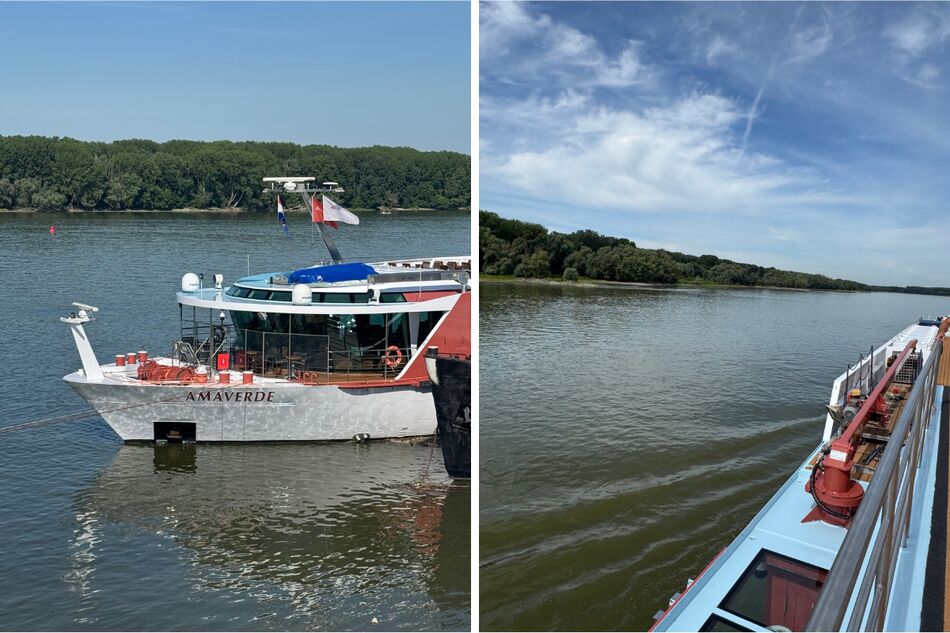
There are many river cruises operating on the Danube with different itineraries and durations. I was very excited to have the opportunity to sail along the Lower Danube, passing through five countries in seven luxurious days aboard the fabulous Ama Verde – one of the award-winning collection of AmaWaterways river cruise ships. They say that “life onboard the Ama Verde mirrors the spirit of the Danube, blending refined spaces, regionally-inspired meals and moments of quiet connection into a journey that feels personal at every turn”. I would wholeheartedly agree with that statement. With just 80 staterooms and a maximum of 160 passengers to 51 crew, we were thoroughly well looked after all week.
Our cabin on the Cello deck was a good size and featured both a proper balcony and a French balcony. It was extremely comfortable and in keeping with the fresh, modern style of Ama Verde. We enjoyed live music and entertainment in the main lounge, quiet time in the library, and sunshine and activities on the outdoor deck which also has a heated pool, whirlpool, putting green and walking track. Although I did not partake, there was also a well-equipped fitness centre and bicycles available to rent. I did, however, very much enjoy relaxing in the onboard spa. All Ama Waterways cruises include all meals, beer and wine with lunch and dinner, a daily sip & sail cocktail hour, Wi-Fi and a plentiful selection of guided shore excursions in every port.
Day one – Budapest, Hungary
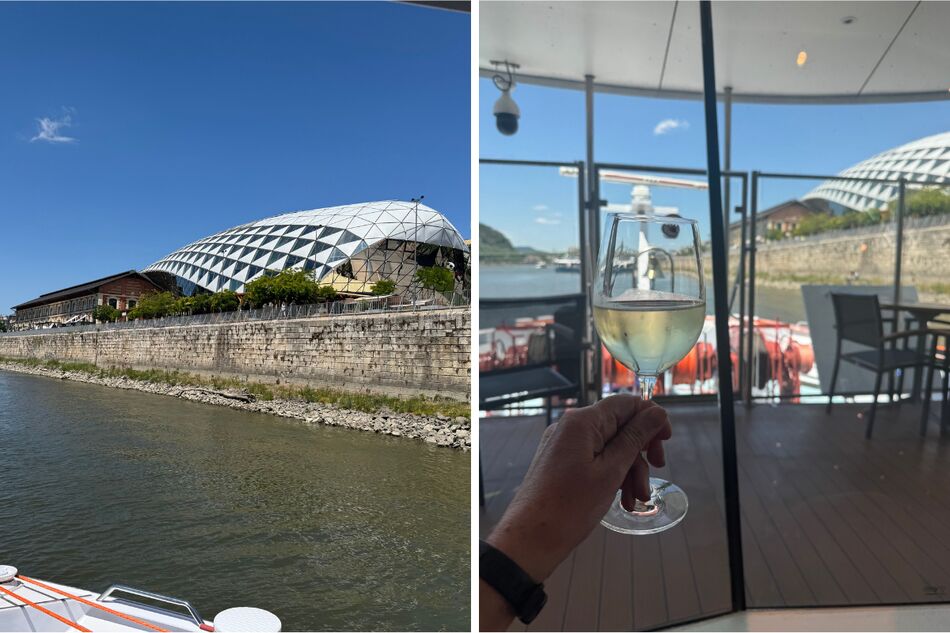
Departing from Budapest aboard Ama Verde
You can sail in either direction, but for this trip we started in Budapest, the capital of Hungary, sailing to Giurgiu in Romania. A short airport transfer was included and we stepped aboard with the city’s historic skyline as the backdrop and the gentle flow of the Danube all around us. We enjoyed a lazy afternoon exploring our sumptuous surroundings and making new acquaintances before a safety briefing and a decadent evening welcome dinner. We chose The Chef’s Table and enjoyed a fabulous multi-course tasting menu with carefully selected wine pairings.
Day 2 – Pécs, Hungary
On our second day in Hungary, we sailed to Mohács and explored the nearby city of Pécs, a UNESCO World Heritage Site founded by the Romans, replete with vibrant squares and cobblestone streets. Here, I enjoyed a hearty bowl of goulash for lunch and ventured out on my first complimentary excursion, joining a like-minded group of fellow travellers for an afternoon of Hungarian wine tasting at the prestigious family-owned Takler Winery. Generally, I am not a red wine lover, but I was mightily impressed with their Blue Franc wine and even purchased a bottle to take home with me.
Day 3 – Vukovar, Croatia
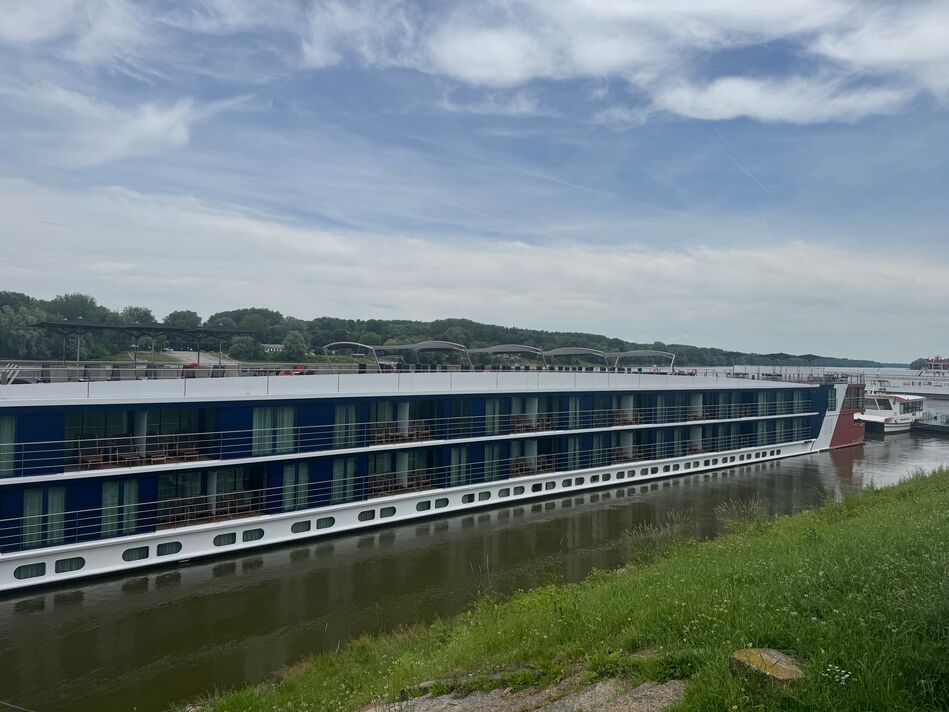
Ama Verde
As it happens, we had actually arranged a side-trip today into Bosnia and Herzegovina, which was not part of the official AmaWaterways itinerary. There were, however, five complimentary excursions on offer today in Croatia, including city sightseeing tours, bike tours and wine tasting. Vukovar is a historic city and Croatia’s largest river port. It still bears the scars from the brutal 87-day Siege of Vukovar by the Yugoslav People's Army and Serbian paramilitaries which took place from August to November in 1991.
Day 4 – Belgrade, Serbia
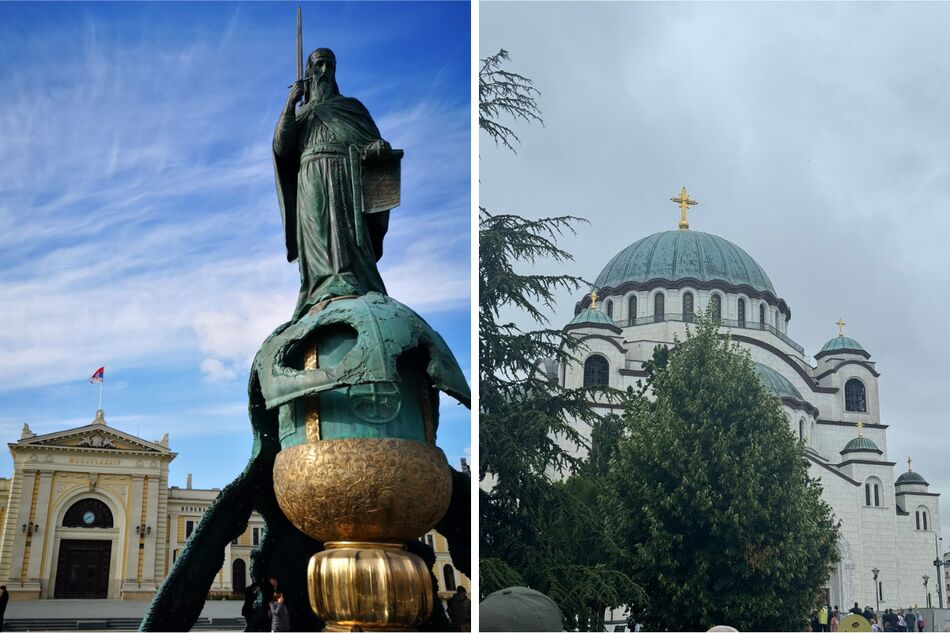
Belgrade, Serbia
Belgrade is the historic capital of Serbia, located at the confluence of the Sava and Danube rivers. Known for its resilient spirit, vibrant streets, and bustling café culture, the city blends centuries-old fortress history with dynamic nightlife and modern waterfront developments. It’s also home to the renowned Nikola Tesla Museum, which is dedicated to the life and work of Nikola Tesla, the Serbian-American engineer and inventor who developed the alternating current (AC) electrical system that went on to power the modern world. After a morning exploring, I met up with my new friends for a Serbian brandy tasting called Rakija. At 40-50% alcohol, it’s certainly best in small quantities and not for the faint-hearted!
Day 5 – The Iron Gates, Serbia & Romania
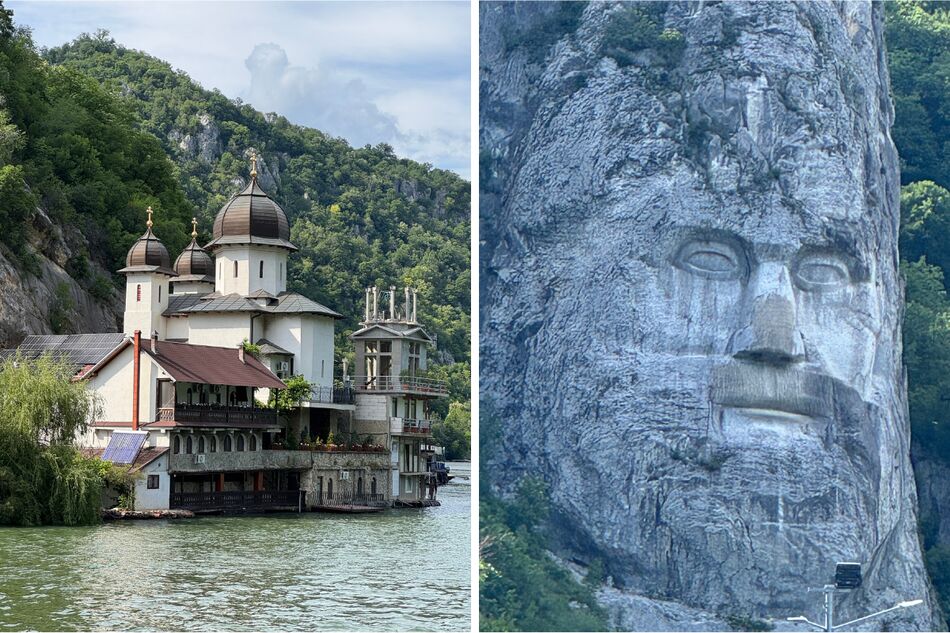
Mraconia Monastery (left) and Rock Sculpture of Decebalus (right)
This morning, we visited the Golubac Fortress which we had docked alongside. Then, maybe the highlight of the trip – an afternoon scenic cruising through the Iron Gates. Unlike the rest of the Danube, this stretch passes through an impressive gorge as the Danube winds between the Carpathian and Balkan mountains. With Serbia on one side and Romania on the other (with a time difference between the two), I loved taking in the breathtaking scenery with a glass of bubbles from my chair on the sundeck while chatting with my fellow travellers. It’s incredibly scenic and includes a striking mountainside carving of King Decebalus on the Romanian side.
Day 6 – Vidin, Bulgaria
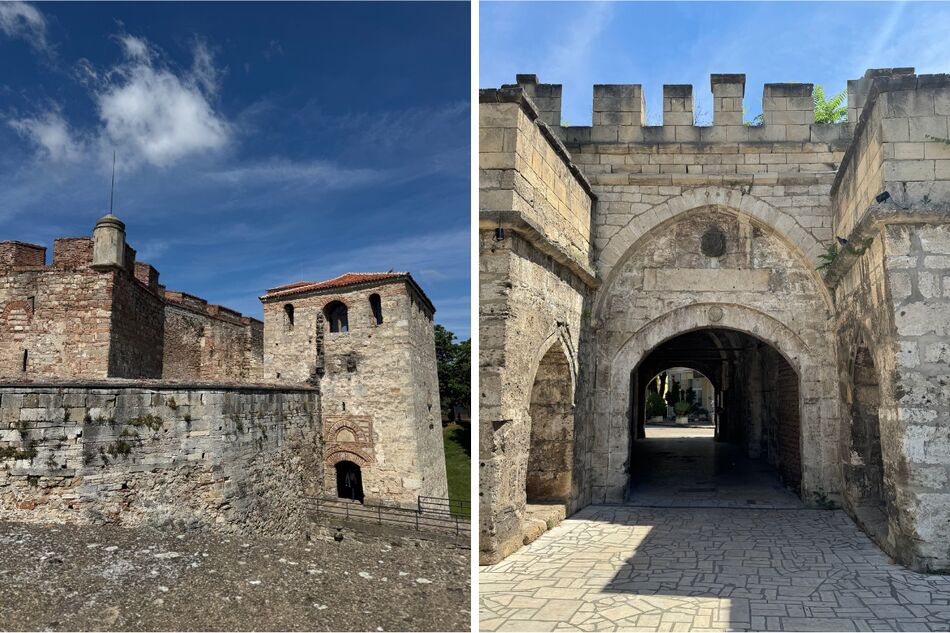
Baba Vida Fortress (left) and Stambol Gate (right)
Arriving in Bulgaria, we docked at the picturesque little town of Vidin, with a long history dating back to an old Celtic settlement before the Romans arrived. The New Europe Bridge completed in 2013 connects Vidin to the Romanian town of Calafat on the opposite bank. I enjoyed a walking tour which included the Baba Vida Fortress; there was also an option to cycle here or join a culinary tour to try the local delicacy, banitsa (a flakey pastry filled with a mixture of cheese, yoghurt and eggs – not a light snack by any stretch).
Day 7 – Rousse, Bulgaria
Also known as ‘Little Vienna’, Rousse is the largest Bulgarian city on the Danube and known for its stunning 19th and 20th century Neo-Baroque and Neo-Rocco architecture. We arrived here on a Sunday and nothing much was open. I would strongly recommend pre-booking one of the complimentary excursions which include a full day visit to Bucharest, a full day visit to Veliko Tarnovo, or the very popular tour to the Rock-Hewn Churches of Ivanovo.
Day 8 – Giurgiu, Romania
On the final day of our voyage, we arrived in our fifth and final country, Romania, where we made a swift and efficient disembarkation after breakfast in Giurgiu. From here, it was around a two-hour transfer by taxi to the capital, Bucharest. Our flight was very late in the evening, so we booked day spa access at the famous Therme Spa, which is rather conveniently just 15 minutes from the airport. It really is fabulous, featuring indoor and outdoor pools, bars, slides, saunas, steam rooms and dining venues. I’d thoroughly recommended making a stop here on your final day in Romania as a wonderful way to round off your trip.
Final thoughts
This was my first ever European river cruise and I absolutely loved the entire experience. Strauss may be mistaken in calling the Danube blue, but I already can’t wait to book another Danube cruise, perhaps to include his hometown of Vienna next time and maybe sailing aboard the new Ama Magna river ship. Ama Magna is twice the width of traditional European river ships, meaning more space and larger suites, four dining venues, alongside a spa, pool and whirlpool. All in all, this was a wonderful introduction to the world of river cruising – and I’m sure it won’t be long before my next one.


